
The Hidden Cost of Vendor Commissions: What Every Indian Wedding Couple Should Ask Before Signing
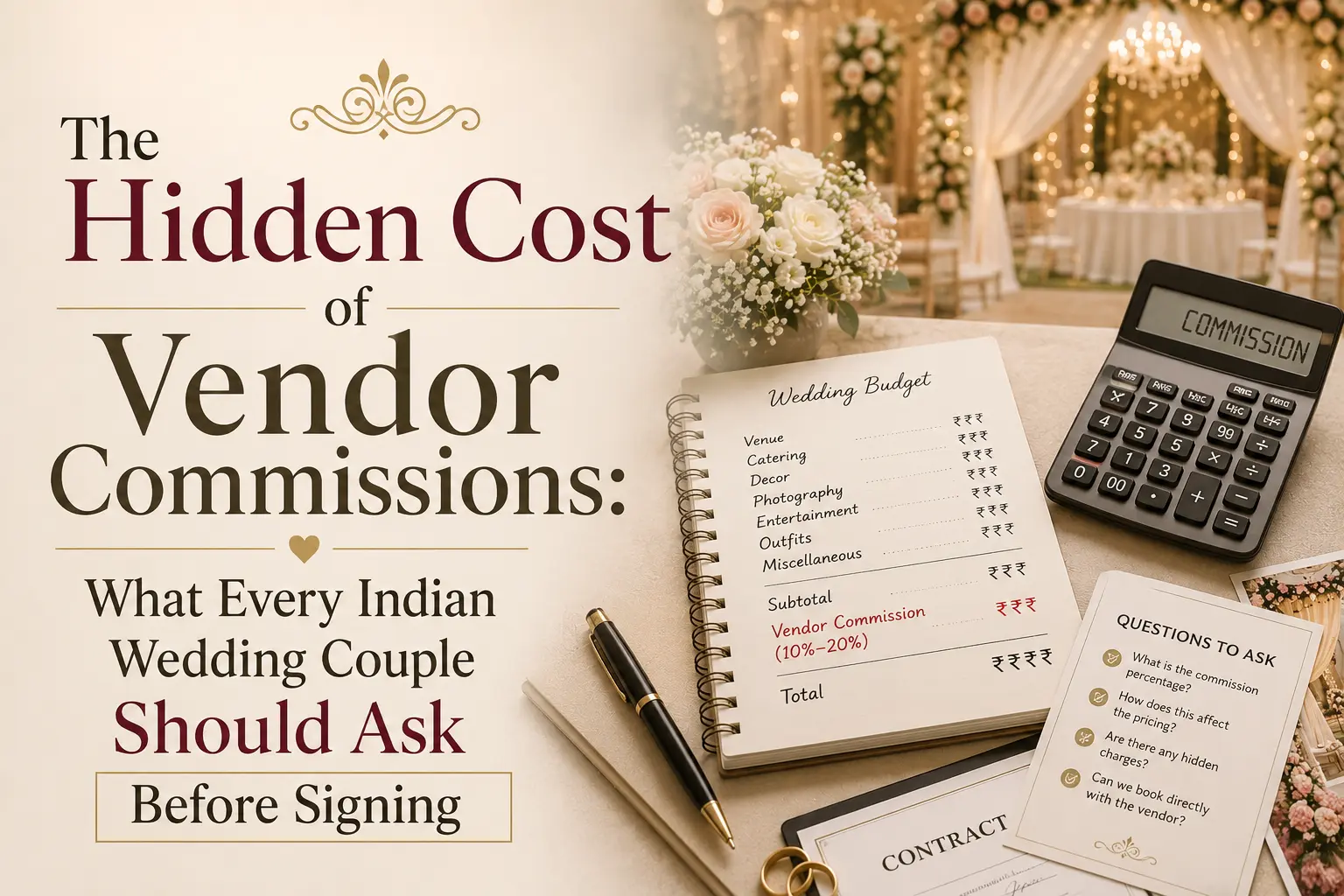
There’s a conversation that almost no one in the Indian wedding industry talks about openly, and it directly affects how much you pay for your wedding. It’s the question of vendor commissions.
How Vendor Commissions Actually Work
Most wedding planners, including several very good ones, earn a commission of 10 to 15 per cent from the vendors they book on your behalf. Your décor company, your caterer, your photographer, your entertainment team- each one may be paying your planner a percentage of what you pay them. This commission is usually built quietly into the vendor’s quote. You are rarely told it exists, and you are rarely shown what the vendor’s price would have been without it.
Why This Is Not Illegal, But Is a Conflict of Interest
To be clear, this practice is not illegal, and it is common enough across the industry that most planners do not think of it as a problem. But it creates a quiet incentive that works against you. The best wedding planner in India earning 15 per cent from one décor company has a financial reason to recommend that company, even in a case where a different vendor may suit your wedding better or cost you less.
The Questions to Ask Before You Sign
- Do you earn any commission or referral fee from the vendors you recommend to me?
- Can I see the vendor’s quote directly, with your fee shown as a separate line item?
- If I choose to bring in my own vendor for any category, does your fee change?
- Is your planning fee a flat rate, or does it scale with what I spend on vendors?
A wedding planner company in India that answers these questions directly and without hesitation is telling you something important about how they run their business. A planner who becomes vague or defensive is also telling you something.
What a Zero-Commission Model Looks Like
At Hitched India, one of the best wedding planners in India, we do not take commissions from any vendor we book on a client’s behalf. We charge a transparent flat fee for our planning and design services. Vendors invoice our clients directly, at the price they would charge anyone. The cost you see in your budget tracker is the cost you actually pay. We built our business this way because we believe the incentive structure of a wedding planner should be aligned entirely with the family paying for the wedding, not with the vendors being booked.
| Curious what a zero-commission wedding planning relationship actually looks like in practice? We are happy to walk you through it. Get in touch. |
Frequently Asked Questions
1. What is a wedding planner commission?
A wedding planner commission is a percentage paid by a vendor to the planner when the planner secures a booking. In many cases, this commission is built into the vendor’s pricing and may not be disclosed separately to the couple.
2. Are vendor commissions in the Indian wedding industry legal?
Yes, vendor commissions are a common and legal practice in the Indian wedding industry. However, couples should understand how these commissions work, as they may influence vendor recommendations and affect overall wedding costs.
3. How can I avoid hidden wedding costs in India?
Ask the best wedding planner in India whether they receive commissions from vendors, request direct vendor quotations, clarify how the planner’s fee is structured, and ensure all charges are transparently documented before signing any agreement.
4. What is a zero-commission wedding planning model?
A zero-commission model means the wedding planner does not receive referral fees or commissions from vendors. Instead, the planner charges a transparent planning fee, while vendors invoice the couple directly at their standard rates.
5. Why does Hitched India follow a zero-commission approach?
Hitched India, a top-notch wedding planner company in India, believes a planner’s loyalty should remain entirely with the couple. By not accepting vendor commissions, we eliminate potential conflicts of interest and provide transparent budgeting, unbiased vendor recommendations, and complete cost visibility throughout the wedding planning process.